Permanent Outdoor Lights: Are They Worth It? Govee vs Eufy vs Lepro
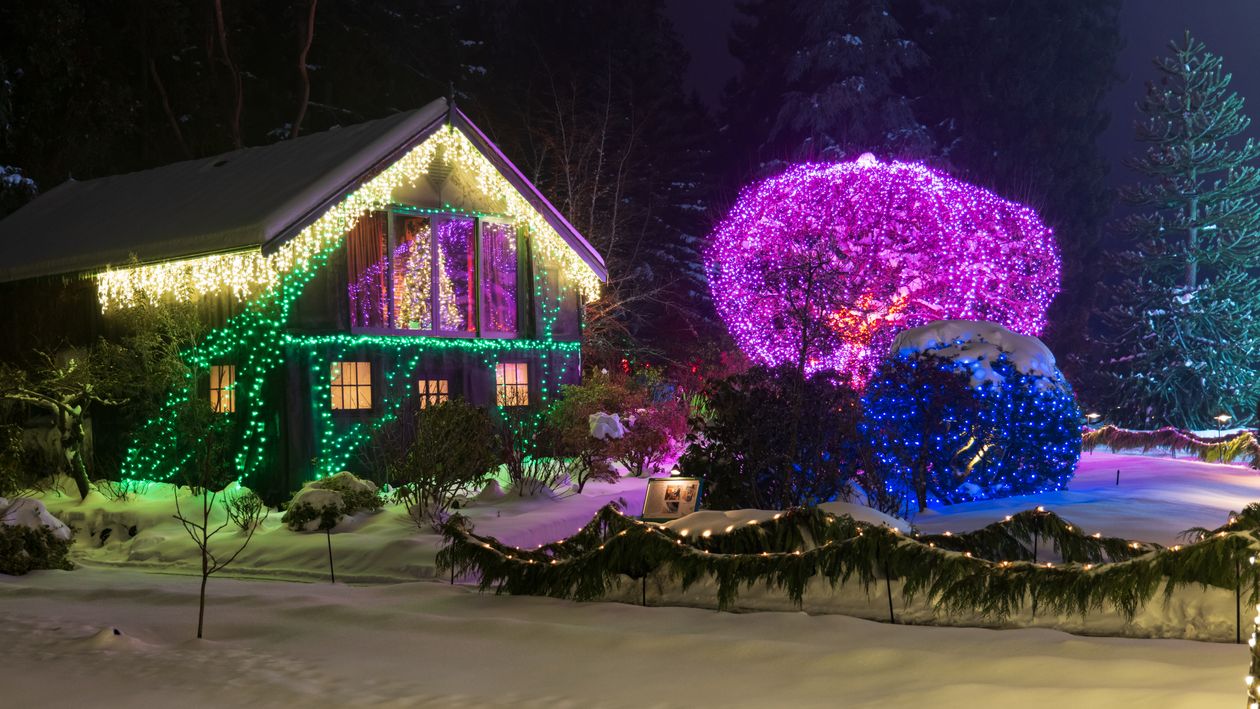
Every year, the same ritual: haul out the ladder, untangle strands, find the one dead section, climb up in the cold, and repeat it all in reverse in January. Permanent outdoor lights promise to end that. You install them once along the roofline, and they stay up all year, glowing white on ordinary evenings and switching to red and green, orange and purple, or red, white, and blue whenever you want, all from an app.
They’ve gone from a niche, professionally installed product to something you can buy on Amazon and put up yourself in an afternoon. This guide covers how permanent outdoor lights work, which ones are worth buying, what they really cost, and the installation details that decide whether they look great or look cheap.
What Are Permanent Outdoor Lights?
Permanent outdoor lights are weatherproof LED strips or rows of individual LED pods mounted along your eaves, gutter line, or under the soffit. Because the lights are small and often mounted in a track or close to the trim, they’re barely visible during the day.
What makes them different from regular holiday string lights:
- They stay up all year. No seasonal install or take-down.
- Every light is controllable. Most use individually addressable LEDs, which means each pod can be a different color, so you get chasing patterns, gradients, and animations.
- They include white light. Better models include dedicated white LEDs, so you can use them as everyday architectural or security lighting, not just for holidays.
- They’re app and voice controlled. Schedules, scenes, and voice commands through Alexa or Google are standard.
Are Permanent Outdoor Lights Worth It?
For most homeowners who decorate every year, yes. A few things push the math in their favor:
- Time and safety. You stop climbing a ladder in December. Falls from ladders while decorating send thousands of people to the emergency room every holiday season.
- Year-round use. You get holiday lighting for Halloween, Christmas, the Fourth of July, game days, and birthdays, plus soft white lighting the rest of the year.
- Low running costs. LED lights use far less electricity than old incandescent strands. The Department of Energy notes that residential LEDs use at least 75 percent less energy than incandescent lighting and last up to 25 times longer.
The main downsides are the upfront cost and the commitment. Once they’re up, they’re up, so placement matters. And if you rent, check with your landlord first.
The Best Permanent Outdoor Lights
Prices swing a lot, and these products see some of the year’s deepest discounts around Black Friday, often 35 to 50 percent off. Treat these as typical sale ranges.
Govee Permanent Outdoor Lights 2: Best Overall
Govee essentially created the DIY permanent lighting category, and its second-generation lights are the most popular choice. They have a huge library of animated scenes, a polished app, and white plus color LEDs.
- Typical sale price: around $130 for 50 feet, with longer kits and Pro versions up to 150 feet
- Works with: Alexa, Google Home, and the Govee app, with Matter on newer versions
- Best for: most homes, especially if you want lots of effects
Eufy Permanent Outdoor Lights: Best Value for Long Rooflines
Eufy’s kits often undercut Govee on price per foot, particularly for 100-foot runs. The E22 has been one of the strongest values during sales.
- Typical sale price: roughly $170 for 100 feet (E22), more for the higher-end S4
- Best for: larger homes where you need a lot of length
Lepro E1: Best Budget Option
If you just want to try permanent lights without a big spend, Lepro’s kits sell for under $100 for 50 feet on sale and include AI-generated light shows.
- Typical sale price: under $100 for 50 feet
- Best for: smaller homes and first-time buyers
Permanent Outdoor Lights Comparison
| Brand | Typical sale price | Lengths | Best for |
|---|---|---|---|
| Govee Permanent Outdoor Lights 2 | ~$130 for 50 ft | 50 to 150 ft | Best effects and app |
| Eufy E22 | ~$170 for 100 ft | 100 ft and up | Long rooflines on a budget |
| Lepro E1 | Under $100 for 50 ft | 50 to 150 ft | Trying it for less |
| Professional install | Often $1,500 and up | Custom | Large or two-story homes |
How to Install Permanent Outdoor Lights
A DIY install on a single-story home usually takes an afternoon. Two-story homes are a different story, and that’s where hiring a pro starts to make sense.
- Measure your roofline. Measure every section you want to light and add 10 percent. Buying one long kit usually costs less than chaining short ones.
- Find your power source. You’ll need an outdoor GFCI outlet near where the run starts, ideally under the eaves or in the garage.
- Plan your corners. Corners are where DIY installs look messy. Use the corner connectors included with the kit instead of bending the strip.
- Clean and prep the surface. Adhesive alone often fails in cold or hot weather. Use the screws or clips included, especially on vinyl or wood trim.
- Test before you mount. Lay the lights out on the ground and connect them to the app first. Finding a dead section on the ground is much easier than on the roof.
Do the install on a dry, mild day. Adhesive doesn’t bond well below about 50°F, so in many parts of the country, early fall is the ideal time.
Can You Install Permanent Outdoor Lights in Winter?
Yes, and plenty of people do it in late November when the first holiday weekend arrives. Winter installs just need a little more care:
- Don’t rely on adhesive in the cold. Most kits use tape that bonds poorly below about 50°F. Use the screws or mounting clips that come in the box instead, especially on vinyl or wood trim.
- Pick the warmest, driest afternoon you can. Wet trim and frozen gutters make clips slip and ladders dangerous.
- Warm the strip indoors first. Cold LED strips are stiffer and harder to route around corners. Leaving the box inside overnight helps.
- Never work on icy ladders or roofs. If your roofline is two stories or the eaves are coated in ice, hire a pro or wait for a mild spell. No light show is worth a fall.
If you only manage part of the roofline before the holidays, that’s fine. Install the front of the house now and finish the sides in spring, when adhesive and clips go on more easily.
Smart Ideas Beyond the Holidays
The real payoff comes from using permanent outdoor lights all year:
- Sunset white lighting. Schedule warm white light at dusk for curb appeal, then dim it at bedtime.
- Motion-triggered security lighting. Link them to a camera or motion sensor so they brighten when someone approaches. Our smart outdoor lighting guide covers more security setups.
- Holiday calendar. Schedule color themes for every holiday so they change automatically.
- Team colors on game day. It’s a little silly, and everyone does it anyway.
You can also combine them with the routines in our smart lighting beyond bulbs guide, so your outdoor lights follow the same scenes as the inside of the house.
DIY vs Professional Permanent Outdoor Lights: What It Really Costs
This is the biggest decision you’ll make, and the price gap is huge. Professional systems from companies like Trimlight, JellyFish, and Gemstone are installed by local dealers and priced per linear foot. JellyFish puts its typical installed price at $25 to $35 per linear foot, and Trimlight quotes $18 to $35 per foot depending on the home and region. DIY kits, by comparison, work out to roughly $3 to $5 per foot at full price, and less on sale.
Here’s what that looks like for a typical home with about 150 feet of roofline across the front and garage:
| Option | Approx. cost per foot | Approx. total for 150 ft | Who installs it |
|---|---|---|---|
| DIY kit (Govee, Eufy, Lepro) | $3 to $5 | $450 to $750 | You, in an afternoon or two |
| Professional system (Trimlight, JellyFish, Gemstone) | $18 to $35 | $2,700 to $5,250 | Local dealer, usually in one day |
| Hiring someone to hang regular lights each year | Varies | $300 to $1,000+ per year | Seasonal installer |
The pro systems cost more, but you get a few things in return: an aluminum channel that hides the lights almost completely, a cleaner look on corners and peaks, no ladder work for you, and longer warranties, often 5 to 10 years versus much shorter coverage on most DIY kits. For a single-story ranch, DIY is hard to beat. For a two-story home with steep peaks, the pro route starts to make a lot of sense.
What to Check Before You Buy Permanent Outdoor Lights
Not all kits are built the same. Before you order, check these details on the spec sheet:
- Waterproof rating. Look for IP67 or IP68 on the lights themselves. Control boxes are usually rated IP65, so mount them under the eaves or in the garage, out of direct rain.
- Dedicated white LEDs. Lights labeled RGBW or RGBWW include separate white diodes, which give you a much cleaner warm white for everyday use than mixing red, green, and blue.
- Cuttable or fixed length. Some kits can be cut and reconnected to fit your roofline exactly. Others come in fixed lengths, so measure carefully.
- Spacing between lights. Closer spacing looks smoother from the street. Wider spacing costs less but can look spotty on a long run.
- Smart home support. Most work with Alexa and Google Home. If you use Apple Home or want local control, look for Matter support, which newer Govee Pro models include.
- HOA rules. Some homeowners associations restrict permanent exterior lighting or colored lights outside the holiday season. Check before you drill.
Permanent Outdoor Lights FAQ
How long do permanent outdoor lights last?
The LEDs themselves are rated for many years of use, and running them a few hours a night barely dents that lifespan. In practice, the weak points are the controller, the power supply, and the connectors, which is why the warranty matters. Professional systems typically come with longer coverage than DIY kits.
Will they damage my roof or gutters?
Installed correctly, no. Lights are mounted to the fascia, soffit, or gutter edge with small screws or clips, never through the shingles. You’ll leave a row of tiny screw holes if you ever remove them, which are easy to fill and paint.
Do permanent outdoor lights use a lot of electricity?
No. They’re LED, so they use a small fraction of the power of old incandescent strands. Even running warm white every evening all year, the cost is modest. If you want to track it, put the controller on a smart plug with energy monitoring.
Can renters install them?
Usually not without permission, since most installs involve screws into the trim. If you rent, ask your landlord first, or look at plug-in string lights and clip-on options instead. Our smart home for renters guide covers no-drill alternatives.
Do they work with Apple Home?
Some do. Kits with Matter support, such as Govee’s Pro line, can be added to Apple Home, Google Home, Alexa, and SmartThings. Models without Matter are usually limited to their own app plus Alexa and Google Assistant. For holiday lighting inside, see our guide to smart Christmas tree lights.
The Bottom Line
If you’re tired of the yearly ladder routine, permanent outdoor lights are one of the most satisfying smart home upgrades you can make. Govee is the safe, feature-rich choice, Eufy is great value for long rooflines, and Lepro is a cheap way to try it out.
The smartest move is timing: buy during Black Friday sales, when prices drop the most, and install before it gets too cold for the adhesive to hold. If you like the effect, you can extend it to the patio with smart light strips using the same app.