Smart Home for Renters: What You Can Do Without Losing Your Deposit
Here’s the assumption that keeps most renters from building a smart home: “I can’t do anything permanent, so I can’t do much at all.” It’s wrong — and it’s worth correcting early, because the smart home for renters market has grown dramatically in the last few years.
The honest truth in 2026 is that renters can build a genuinely useful smart home — lights, security, climate control, voice control, automations — without drilling a single hole, modifying any wiring, or risking their security deposit. The catch is knowing which devices require permanent changes and which ones don’t. Most buyers don’t know the difference until they’re already in trouble.
This guide draws the line clearly. Here’s what you can do freely as a renter, what requires a conversation with your landlord first, and what to avoid entirely.
The One Rule That Governs Everything
Before the device list, the principle worth remembering: if it changes the property, ask first or don’t do it. If it only uses the property — outlets, light sockets, existing hardware — you’re almost always fine.
A smart plug uses your outlet. Fine. A smart bulb uses your light socket. Fine. A video doorbell that replaces your existing wired doorbell button modifies the property. Ask first. A smart switch that replaces a wall switch involves wiring. Ask first, or skip it.
This line between “using” and “modifying” is the whole framework. Everything else is detail.
What You Can Do Freely (No Permission Needed)
Smart Bulbs — Your Best Starting Point
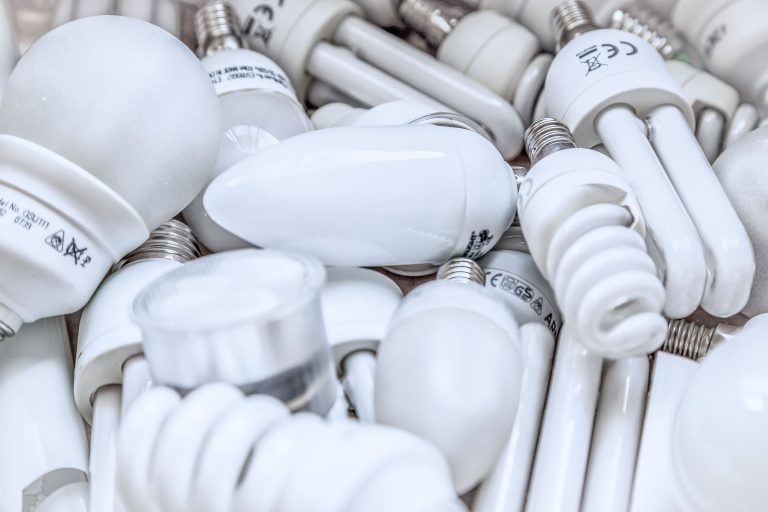
Smart bulbs screw into existing fixtures exactly like ordinary bulbs. When you move out, you unscrew them, put the original bulbs back, and take everything with you. No evidence you ever had them. This makes smart bulbs the single most renter-friendly smart home device — and also one of the most useful.
With smart bulbs you get dimming, colour temperature control, schedules, voice control, and automations — all without touching any wiring or permanent fixture. The wall switch problem (where someone flips the switch and cuts power to the bulb) is a real consideration, but for lamps and fixtures in rooms where you control the switch, it’s manageable.
What to look for: bulbs with local control and Matter certification move with you and work with your next ecosystem, not just the one you have now.
Smart Plugs — Instant Automation for Any Outlet
Smart plugs turn any outlet into a controllable power point. Plug one into your existing outlet, plug your lamp (or fan, or coffee maker, or TV) into the smart plug, and that device is now on a schedule, controllable by voice, and part of your routines. When you leave, you unplug it and take it with you. Zero footprint.
Smart plugs are particularly useful for renters because they solve the “I can’t replace the switch” problem — you’re not replacing the switch, you’re adding smarts to the outlet side. A floor lamp with a smart plug becomes a smart lamp without touching anything in the walls.
Smart Speakers and Displays — The Hub That Sits on a Shelf
An Amazon Echo, Google Nest Hub, or Apple HomePod sits on a shelf, plugs into an outlet, and becomes the voice control centre for everything else in your smart home. It belongs to you, moves with you, and requires no property modification whatsoever. In terms of renter-friendliness, this is as clean as it gets.
In 2026, all major smart speaker platforms support Matter, which means a smart speaker you buy today works as a Thread Border Router and Matter controller for a wide range of devices — future-proofing your setup across moves.
Battery-Powered Motion Sensors and Door Sensors
Motion and contact sensors that run on batteries and mount with adhesive strips (3M Command-style or similar) are completely renter-safe. They trigger automations — lights on when you enter a room, alerts when a door opens — without any drilling or wiring.
Brands like Aqara make excellent sensors that work across Matter, Apple Home, Google Home, and Alexa, with years of battery life. When you move, they peel off the wall cleanly and come with you.
Portable Security Cameras
Indoor cameras that sit on a shelf or tabletop require no mounting at all. Battery-powered outdoor cameras mount with adhesive or magnetic bases that release cleanly. Neither modifies the property in any lasting way.
The key for renters is choosing cameras with adhesive or magnetic mounting, no screws required. Arlo, Eufy, Blink, and Ring all make battery-powered options in this category. When you move, the adhesive strips peel off without damaging paint (when removed correctly), and the cameras go with you.
A note on shared spaces: if you live with housemates, indoor cameras need to be positioned so they cover your space, not your housemates’ private areas. This is a privacy consideration, not a landlord one — but it matters.
Smart Locks (Retrofit Style)
Here’s the smart lock option most renters don’t know exists: retrofit smart locks that attach to the inside of your existing deadbolt without replacing the lock cylinder or touching the outside of the door.
Brands like August and Level make locks that clip onto your existing deadbolt’s thumb turn on the interior side. Your existing key still works from outside; you just add phone and voice control from inside. Installation is typically under five minutes with a screwdriver, and removal leaves no trace.
This is very different from a smart lock that replaces the entire lock assembly — that’s a modification. A retrofit lock is an addition to your existing hardware.

What You Should Ask Your Landlord About First
These devices involve the property in a way that’s worth getting written agreement on:
Smart thermostats: if your unit has its own thermostat and HVAC system, a smart thermostat replaces an existing device. Many landlords are fine with this (it saves energy and they often benefit too), but get it in writing and save the original thermostat to reinstall when you leave.
Smart switches: these involve wiring and replace an existing switch. The installation is reversible, but it’s a wiring modification. Worth asking — some landlords say yes, especially for dimmer switches. Always get written permission and save the original switch.
Wired video doorbells: replacing an existing wired doorbell button involves the building’s wiring. Ask before touching. Battery-powered video doorbells that sit in the existing doorbell’s mounting location without replacing any wiring are a different story — still worth checking your lease.
Any adhesive mounting on sensitive surfaces: 3M strips release cleanly from painted drywall in most cases, but can damage wallpaper, unprimed surfaces, or textured finishes. Test on an inconspicuous spot first.

The Security Deposit Reality Check
Security deposits in the US averaged $1,495 nationally in 2024 — and that’s what’s at stake when a device causes damage. The framework is simple: if a device leaves a mark, a hole, or damages a surface, it comes out of your deposit.
The devices above avoid this when used correctly. A few additional habits protect you further:
Save every original fixture. When you swap a bulb, put the original in a labelled bag. Smart thermostat? Box up the old one and keep it in a cupboard. When move-out day comes, everything goes back to exactly how it was.
Photograph before you start. Document the state of every wall, surface, and fixture before installing anything. This protects you from pre-existing damage being blamed on you.
Don’t overload adhesive mounts. 3M Command strips are rated for specific weights — stay within the rating or things fall and walls get damaged.
Get permission in writing. A landlord who says “sure, go ahead” verbally is not a landlord who will back you up in a deposit dispute. If you’re modifying anything, email confirmation is worth 30 seconds of effort.
Building a Useful Setup for Under $200
Here’s a practical starter kit for a one-bedroom rental that gives you real smart home functionality for under $200:
| Device | Approximate Cost | What It Adds |
|---|---|---|
| Smart bulbs x4 (WiZ or similar) | $40–60 | Lighting scenes, schedules, voice control |
| Smart plugs x2 | $15–25 | Controlled outlets for lamps, entertainment stack |
| Echo Dot (or similar) | $30–50 | Voice control hub, routines, music |
| Battery motion sensor x1 | $20–30 | Automated lighting when you enter a room |
| Retrofit smart lock | $70–100 | Keyless entry, auto-lock, remote control |
Total: roughly $175–265 depending on brand choices. Everything is portable, leaves no trace, and comes with you to your next place.
Conclusion
Being a renter doesn’t mean settling for a dumb home. Smart bulbs, smart plugs, a voice assistant, battery sensors, and a retrofit smart lock give you a genuinely capable smart home without modifying a single thing on the property. The key is choosing devices that use what’s already there — sockets, light fittings, existing hardware — rather than changing it.
The devices that require modification (smart switches, wired doorbells, thermostats) aren’t off the table — they’re just worth a conversation with your landlord first. Many will say yes, especially when they understand that everything will be restored when you leave.
The renter-friendly smart home isn’t a compromise version. It’s just a smart home built with portability in mind from the start — which, if you’re someone who moves every few years, is actually a smarter approach than one that’s bolted permanently to a building you don’t own.