Indoor Air Quality Monitor Guide: What to Measure and Which One to Buy
Winter is when the air inside your home gets worst, and you’d never know it by looking. Windows stay shut, the heat runs all day, and everything from cooking to candles to the people in the room adds to what you’re breathing. The EPA notes that Americans spend roughly 90 percent of their time indoors, where concentrations of some pollutants are often two to five times higher than typical outdoor levels.
An indoor air quality monitor turns that invisible problem into a number you can act on. It tells you when to open a window, run the range hood, or switch on a purifier, and with the right smart home setup, it can do those things for you. This guide explains what these monitors measure, which readings actually matter, and which monitor fits your home.
What an Indoor Air Quality Monitor Measures
Most monitors track a combination of the following. Not every model measures everything, and that’s the most important thing to check before buying.
- CO2 (carbon dioxide): the best indicator of ventilation. It rises when people are in a closed room. High levels cause drowsiness and poor concentration. Look for an NDIR sensor, which measures CO2 directly. Cheaper “eCO2” sensors only estimate it.
- PM2.5 (fine particles): tiny particles from cooking, candles, fireplaces, and wildfire smoke that can travel deep into the lungs.
- VOCs (volatile organic compounds): gases released by cleaning products, paint, new furniture, and air fresheners.
- Humidity: too low in winter dries out skin and sinuses, too high encourages mold. Most experts suggest keeping it roughly between 30 and 50 percent.
- Radon: a radioactive gas from the ground and a leading cause of lung cancer among non-smokers. Only a few monitors measure it.
Note that an air quality monitor is not a carbon monoxide alarm. CO is a different, deadly gas, and you need a dedicated alarm for it. Our smart smoke detector guide covers combo smoke and CO models.
What the Numbers Mean
Readings are only useful if you know what to do with them. Here’s a practical way to read the two most important ones.
| Reading | Good | Act on it | What to do |
|---|---|---|---|
| CO2 | Under about 800 ppm | Above 1,000 to 1,400 ppm | Open a window, run ventilation, leave the door open |
| PM2.5 | Under 12 µg/m³ | Above 35 µg/m³ | Run the range hood or a purifier, avoid candles |
| Humidity | 30 to 50 percent | Below 30 or above 60 | Run a humidifier or dehumidifier |
Outdoor air typically sits around 420 ppm of CO2, so a reading close to that indoors means a well-ventilated room. Bedrooms with the door closed overnight are often the worst offenders, sometimes climbing well past 1,500 ppm by morning.
The Best Indoor Air Quality Monitor Options
Qingping Air Monitor Pro Gen 2: Best for Most People
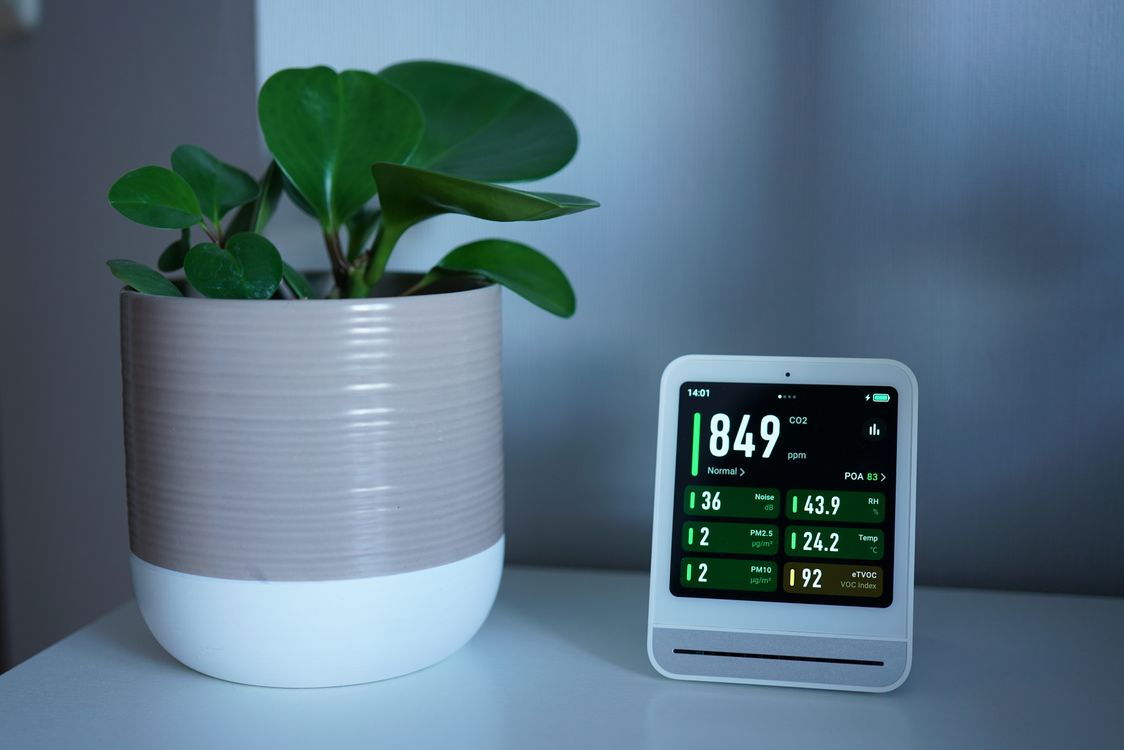
This monitor measures CO2 with a real NDIR sensor, plus PM2.5, PM10, VOCs, temperature, and humidity, on a clear touchscreen. That’s a lot of coverage for around $150, and the particle sensor is replaceable.
- Price: about $150
- Measures: CO2, PM2.5, PM10, VOCs, temperature, humidity
- Downside: the app can be buggy after updates
Aranet4 Home: Best CO2 Monitor
If ventilation is your main concern, the Aranet4 is the reference standard. Its e-ink screen is easy to read, and the batteries last for years. It doesn’t measure particles or VOCs, but it does CO2 extremely well.
- Price: about $190
- Measures: CO2, temperature, humidity, pressure
- Best for: bedrooms, home offices, and classrooms
Airthings View Plus: Best If Radon Is a Concern
Radon is common in many parts of the U.S., especially homes with basements. The View Plus is one of the few consumer monitors that measures radon alongside CO2, particles, and VOCs, and it works with Alexa and Google Assistant.
- Price: just under $300
- Measures: radon, CO2, PM2.5, VOCs, temperature, humidity, pressure
- Downside: expensive if you don’t need radon readings
AirGradient ONE: Best for Home Assistant
AirGradient is an open-source monitor with high-quality, replaceable sensors and excellent Home Assistant support. If you want your air readings to drive automations, this is the most flexible choice.
- Measures: CO2, PM2.5, VOCs, NOx, temperature, humidity
- Best for: tinkerers and smart home enthusiasts
Temtop S1: Best Budget Particle Monitor
For under $30, the Temtop S1 gives you a basic PM2.5 reading, which is useful during wildfire season or for checking whether cooking smoke is lingering. It won’t measure CO2, so treat it as a particle check, not a full monitor.
Indoor Air Quality Monitor Comparison
| Monitor | Approx. price | CO2 (NDIR) | PM2.5 | Radon | Smart home |
|---|---|---|---|---|---|
| Qingping Pro Gen 2 | $150 | Yes | Yes | No | Limited |
| Aranet4 Home | $190 | Yes | No | No | App only |
| Airthings View Plus | ~$300 | Yes | Yes | Yes | Alexa, Google |
| AirGradient ONE | Varies | Yes | Yes | No | Home Assistant |
| Temtop S1 | Under $30 | No | Yes | No | None |
Turn Readings Into Automations
The real value of an indoor air quality monitor comes when it triggers something. With a hub like Home Assistant or a platform that supports your monitor, try these:
- High CO2 in the bedroom: send a reminder to crack a window, or turn on a smart ventilation fan.
- PM2.5 spike while cooking: switch the range hood or a smart air purifier to high.
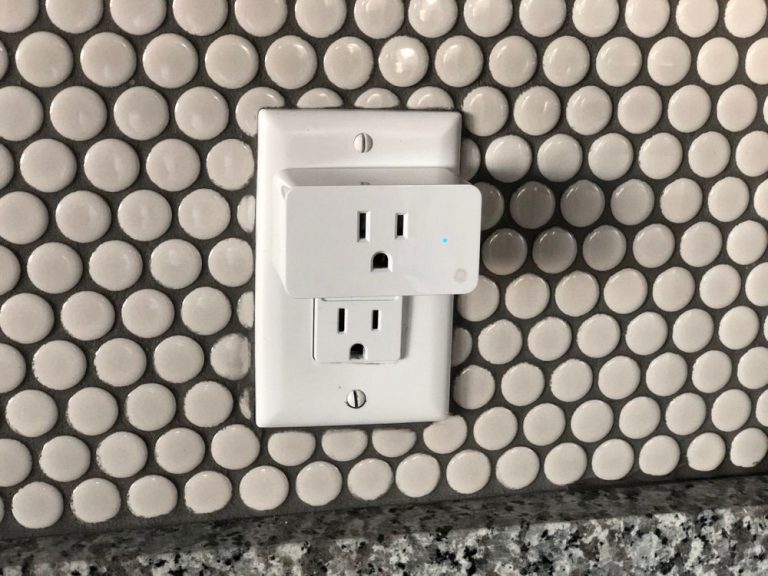
- Low humidity in winter: turn on a humidifier connected to a smart plug.
- Poor outdoor air: close the fresh-air damper and run purifiers when wildfire smoke rolls in.
Our guide to Home Assistant automations walks through building rules like these, and you can tie them into your heating schedule from our best smart thermostat guide, since some thermostats can run the HVAC fan on their own.
Where to Put Your Monitor
Placement changes the readings a lot.
- Breathing height, around three to five feet off the floor.
- Away from windows, vents, and the kitchen stove, which give misleading spikes.
- In the room you use most, usually the bedroom or home office. If you can only buy one, put it where you sleep.
- Not right next to people. Exhaled breath will push the CO2 reading up artificially.
Is an Indoor Air Quality Monitor Worth It?
If anyone in your home has allergies, works from home, or sleeps in a small closed bedroom, a monitor is one of the most eye-opening smart home devices you can buy. Most people are surprised by how quickly CO2 climbs in a closed room, and fixing it is often as simple as opening a door.
For most homes, the Qingping Pro Gen 2 is the best all-round indoor air quality monitor, the Aranet4 is the pick for CO2 alone, and the Airthings View Plus is worth the premium if you live in a radon-prone area. Pick one, watch the numbers for a week, and you’ll know exactly what your home needs. For more ways to make your bedroom healthier, see our smart bedroom setup guide.