Best Smart Home Speakers 2026: Which One Is Right for Your Setup
Smart speakers get compared mostly on voice assistant quality, audio performance, and price. The comparison that matters more for most buyers is ecosystem fit — which smart speaker connects properly to your existing devices, works reliably with the routines you want to build, and doesn’t create a separate app silo that pulls you away from the rest of your setup.
This guide covers the best smart home speakers in 2026 by use case rather than by spec — what each one is actually good at, who it’s right for, and where each one has genuine limitations.
What Makes a Smart Home Speaker Good for Home Control
Audio quality and voice assistant performance get the most attention in speaker reviews, but for smart home use the more important factors are ecosystem integration, local control capability, and how reliably the speaker executes commands and automations.
A speaker that sounds great but adds 2–3 seconds of delay on every smart home command, or that loses connection to devices regularly, is frustrating to use for home control regardless of how good it sounds playing music. Reliability matters more than features for daily smart home use.
Amazon Echo (4th Gen) — Best for Alexa Households
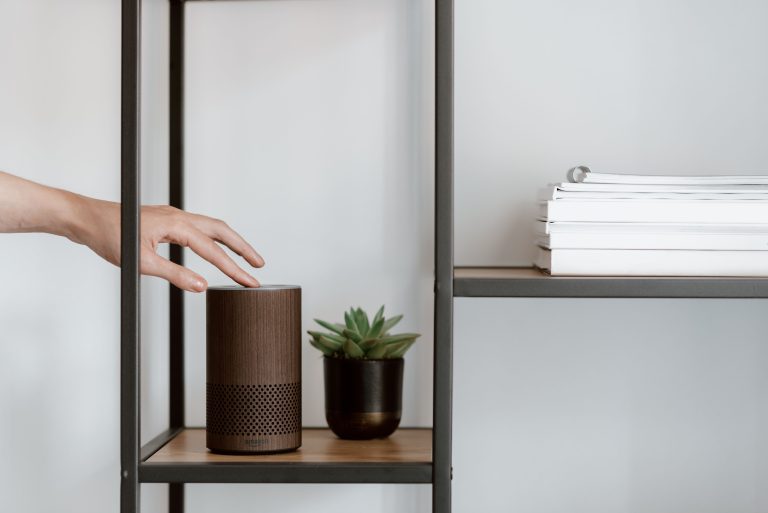
The standard Echo (4th gen, ~$100) is the most capable Alexa hub available in a speaker form factor. It includes a Zigbee hub built in — meaning it can directly pair Zigbee devices without a separate bridge — and a Thread Border Router for Matter-over-Thread devices.
For households built around Alexa, this is the primary home hub: it controls WiFi devices via Alexa, Zigbee devices directly, and Thread/Matter devices via its built-in Border Router. Automations run through Alexa’s cloud, which means internet dependency, but device response for local commands is fast.
The audio quality at $100 is decent but not exceptional. If audio is secondary to smart home function, it’s the right choice. The Echo Studio (~$200) upgrades the audio significantly for those who care about both.
Best for: Alexa-primary households, anyone who wants Zigbee device support without a separate hub, the centre-of-home speaker that coordinates everything.

Google Nest Hub (2nd Gen) — Best for Visual Households
The Nest Hub (~$100) is technically a smart display rather than a speaker, but it’s the best Google Home hub for most households. The 7-inch screen shows camera feeds, weather, calendar, and device controls without unlocking a phone. The microphone is reliable, the Google Assistant integration is the tightest of any Google device, and it doubles as a bedside clock with sleep tracking via the built-in radar sensor.
For smart home control specifically, it executes Google Home automations reliably and shows visual feedback for commands. “Show me the front door camera” displays the feed immediately on screen rather than requiring a phone. For households where a kitchen or living room controller that shows information is useful, this beats a speaker-only device.
Best for: Google Home households, kitchens and living rooms where a display is useful, anyone who checks cameras regularly.
Apple HomePod (2nd Gen) — Best Audio and Best Privacy
The HomePod (~$299) is the most expensive mainstream smart speaker and has the best audio quality in the category. It’s also the best smart home hub for Apple Home households: it acts as a HomeKit home hub, runs automations locally without internet dependency, and includes a Thread Border Router for Matter devices.
Privacy is a meaningful differentiator. Siri requests on HomePod are processed on-device for an increasing number of tasks, and HomeKit’s end-to-end encryption extends to HomePod’s role as a hub. For households that have thought about smart home privacy, this architecture is genuinely different from the cloud-first alternatives.
The limitation: it only works properly in Apple Home. Android users can’t use it for home control. Mixed households are better served by Alexa or Google.
Best for: iPhone-only households, anyone who prioritises audio quality and privacy, households already using Apple TV or iPad as home hubs who want to add audio.
Amazon Echo Dot (5th Gen) — Best Value Per Room
The Echo Dot (~$50) is the best value smart home speaker for secondary rooms. It doesn’t include Zigbee or a Thread Border Router like the full Echo, but for basic voice control and room-level Alexa announcements it’s perfectly capable. The 5th gen version has better audio than previous Dots — not impressive, but adequate for a bedroom or office where music quality isn’t the priority.
For multi-room setups, pairing a full Echo in the main living area with Echo Dots in bedrooms and kitchen gives whole-home voice control at a reasonable overall cost.
Best for: Secondary rooms in Alexa households, anyone building out multi-room voice control on a budget.
Google Nest Mini (2nd Gen) — Google’s Budget Option
The Nest Mini (~$50) is Google’s equivalent to the Echo Dot — compact, capable for basic control, and fine for secondary rooms. Google Assistant’s voice recognition is slightly better than Alexa’s at understanding conversational queries, which makes a difference if the speaker is used heavily for questions and calendar management rather than just device control.
The Nest Mini doesn’t include a Thread Border Router or Zigbee hub, so it’s a voice interface rather than a hub. For primary home control in a Google household, step up to the Nest Hub or a Nest Audio.
Best for: Secondary rooms in Google Home households, bedrooms and kitchens where a small footprint matters.
Which One Should You Buy?
Start with your ecosystem. If you’re in Alexa, the Echo (4th gen) is the primary hub and Dots fill secondary rooms. If you’re in Google Home, the Nest Hub is the primary device and Nest Minis fill secondary rooms. If you’re in Apple Home, the HomePod is the right choice if budget allows, with HomePod minis for secondary rooms.
For the Alexa vs Google Home decision if you’re starting fresh, the ecosystem that matches your phone is usually the right answer: Google for Android households, Alexa or Apple for iPhone households.

Conclusion
The best smart home speaker is the one that integrates cleanly with the rest of your setup. A HomePod in an Alexa household is a beautiful audio device that won’t participate in any of your automations. An Echo Dot in an Apple Home household will execute some commands but miss the deep integration that makes home control actually useful.
Pick your ecosystem first. Then pick the speaker that best serves as a hub within that ecosystem — usually the one with the most built-in hub capabilities, not the best audio. Add secondary speakers for rooms once the main hub is working well.