Smart Home Without Internet: What Keeps Working and What Doesn’t
Most people assume a smart home needs a fast, reliable internet connection to function. That’s true for a lot of setups — but it doesn’t have to be. The question of whether a smart home works without internet has a more interesting answer than most guides give it, and it’s become increasingly relevant as both cloud reliability concerns and local control technology have improved together.
The short answer about a smart home without internet: it depends heavily on which devices and platforms you’re using. Some smart homes go almost completely dark without internet. Others keep working almost normally. And a small number are designed from the ground up to function entirely locally, with internet access treated as optional rather than essential.
Why Smart Homes Go Offline (And Why It Matters)
There are two scenarios where internet connectivity becomes an issue.
The first is an internet outage — your router is fine but your ISP is down. This is increasingly common and in some areas happens several times a year. The question is whether your smart home degrades gracefully or fails completely.
The second is service shutdowns. Smart home companies do get acquired, pivot, or simply close down. When that happens, cloud-dependent devices often stop working. Insteon shut down its servers in 2022 with no warning, leaving thousands of customers with completely non-functional setups. This isn’t a rare edge case — it’s happened to multiple platforms and will happen again.
Local control — where devices communicate directly with a hub on your local network rather than through a cloud server — solves both problems at once.
What Stops Working in a Smart Home Without Internet
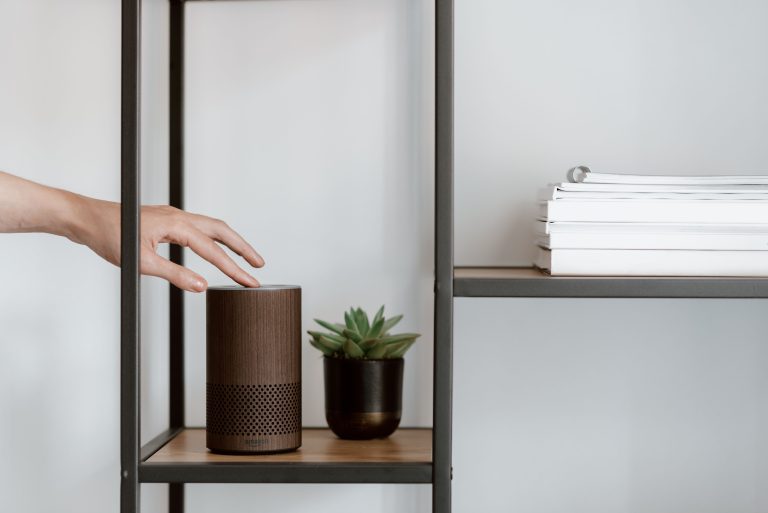
Voice assistants are the biggest casualty of an internet outage. Alexa, Google Assistant, and Siri all process voice commands in the cloud. Without internet, they don’t work at all for smart home commands, regardless of how reliable your local network is.
Cloud-dependent automations also fail. If your Alexa routine sends a command to Amazon’s servers, which then sends it back to your device, that whole chain breaks without internet. Same for Google Home automations that aren’t running locally.
Remote access disappears — you can’t control devices from outside the house, check cameras, or receive alerts.
Third-party integrations between platforms also fail, since those typically route through cloud APIs.
What Keeps Working in a Smart Home Without Internet
This is where platform choice matters enormously.
Apple Home runs automations locally on your Apple TV or HomePod. When your internet goes down, automations keep firing, lights keep following schedules, and devices keep responding to the Home app on your local network. The Home app works over local Wi-Fi even without internet. This is the most capable mainstream platform for local operation.
Zigbee and Z-Wave devices connected to a local hub (like SmartThings, Hubitat, or Home Assistant) keep working over their local mesh network. Commands go hub → device directly, no internet required.
Thread devices with a local Thread Border Router (built into HomePod mini, Apple TV 4K, and newer Echo devices) also operate locally. The devices talk to the hub over Thread radio, not over the internet.
Schedules programmed into the device itself — not the app, but baked into the device firmware — keep running regardless of connectivity. Some smart plugs and switches have this; many don’t. Check before buying if local scheduling matters to you.
Physical controls always work. A light switch still turns the light on and off. A thermostat with physical buttons still responds. This is the smart home design principle worth remembering: never remove a physical control in favour of app-only control, or you lose basic functionality when the smart layer fails.

Platforms Ranked by Local Control Capability
Home Assistant — the gold standard for local control. Home Assistant runs entirely on local hardware (a Raspberry Pi or dedicated device on your network) and has no cloud dependency unless you add it deliberately. Automations run locally, devices communicate locally, and the whole system works without internet indefinitely. This is why it’s become the platform of choice for people who prioritise reliability and ownership over convenience.
Apple Home — the best commercial platform for local control. Automations and device control work locally via Apple TV or HomePod. Remote access requires internet, but everything else keeps working without it. We covered this in detail in our Apple HomeKit review.
Hubitat — a commercial hub that runs entirely locally with no required cloud. Less polished than Apple Home but more flexible. Good option for people who want local control without the setup complexity of Home Assistant.
SmartThings — partially local. Some automations run locally, some require cloud. Getting better with Matter integration but still a hybrid.
Alexa / Google Home — primarily cloud-dependent. Basic device control may work locally for some devices (particularly Matter devices after recent updates), but automations and voice control go through the cloud. Least reliable during outages of the platforms covered here.
Building a Setup That Survives an Outage
You don’t have to build a complete smart home without internet dependency to be more resilient. A few specific choices help significantly.
Use Zigbee or Thread for battery-powered sensors and devices rather than Wi-Fi. These use local radio protocols that don’t depend on internet connectivity. A motion sensor that triggers a light locally will keep working during an outage; one that routes through the cloud won’t.
Keep physical controls accessible. Never replace a wall switch with an app-only solution. Smart switches that can be physically toggled are much better than smart bulbs controlled only via app for this reason.
If you’re on Apple Home, make sure you have a home hub (Apple TV or HomePod) on your network. This is what enables local automation execution.
Consider Home Assistant if local control is a priority. The setup investment is real, but you end up with a system that doesn’t depend on any company’s server infrastructure remaining operational.

Smart Home Without Internet: The Bottom Line
A smart home that works without internet is achievable, but it requires deliberate platform and device choices. Apple Home and Home Assistant are the strongest options for local-first setups. Zigbee and Thread devices are more resilient than Wi-Fi-only alternatives. And keeping physical controls available is the simplest resilience measure of all.
The internet outage scenario is the visible problem. The more serious long-term concern is cloud dependency in general — building a home around devices that require a company’s servers to keep running means your setup is on borrowed time if that company changes direction. Local control isn’t just a convenience feature; it’s a form of ownership.
Most people don’t think about this until something goes wrong. The households with setups that held up during the Insteon shutdown or the various Google Nest feature removals were almost always the ones running local control. It’s worth building that resilience in from the start rather than retrofitting it after a problem forces your hand.