Smart Home Climate Control: Thermostats, Room Sensors, and What’s Worth Buying
Heating and cooling accounts for the largest share of residential energy use, of residential energy use, and it’s also the area where smart home technology has the clearest and most measurable impact. Smart home climate control covers everything from a single smart thermostat to a multi-zone system with room sensors and automated ventilation — and the right level depends heavily on your home, your habits, and your budget.
This guide covers what smart climate control actually involves, which technologies are worth understanding, and how to build a setup that reduces your energy bills and improves comfort without unnecessary complexity.
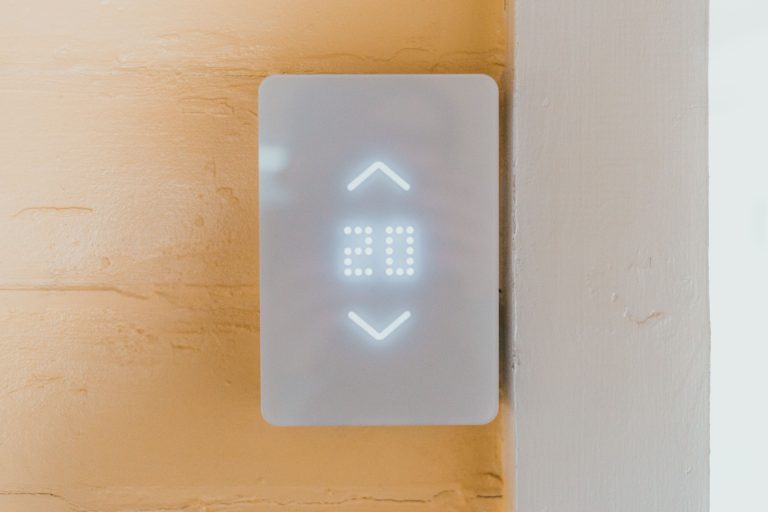
The Foundation: A Smart Thermostat
For most households, smart climate control starts and ends with a smart thermostat. It’s the highest-ROI smart home device for energy savings — real-world data consistently shows 10–15% reductions in heating and cooling costs when geofencing is used consistently.
The key feature that separates useful thermostats from merely connected ones is geofencing: the thermostat backs off when your phone leaves the home area and warms up or cools down before you return, based on your arrival. This adapts to irregular schedules in a way that fixed programming cannot.
We’ve covered the savings case in detail in our smart thermostat guide. The honest numbers: a household spending $150/month on heating and cooling saves roughly $15–22/month with consistent geofencing — about $200/year. The hardware pays back in 1–2 years.
Room-Level Temperature Control
Standard HVAC systems condition the whole home to a single target temperature. The problem is that different rooms run at different temperatures — a sun-facing living room might be 4°F warmer than the thermostat reading, while a north-facing bedroom runs colder. The thermostat compensates for the room it’s in, leaving other rooms either too warm or too cool.
Smart thermostats with room sensors address this. The Ecobee SmartThermostat includes a room sensor in the box and supports additional sensors in up to 32 rooms. Rather than reading only the main thermostat location, Ecobee averages the readings from occupied rooms, or prioritises specific rooms at specific times.
The result: the system conditions based on where people actually are rather than where the thermostat happens to be mounted. If everyone’s in the bedroom at night, the system targets bedroom comfort rather than hallway temperature. This is the most impactful upgrade after basic smart thermostat geofencing.

Smart Vents: Useful in the Right Situations
Smart vents — motorised dampers that replace standard HVAC vents — can redirect conditioned air between rooms. When combined with room sensors, they allow a single-zone HVAC system to approximate multi-zone behaviour: closing vents in unoccupied rooms and opening them in occupied ones.
The honest caveats: smart vents work best in homes with strong HVAC systems that can handle the increased static pressure from partially closed vents. In homes with undersized systems, closing too many vents can damage the equipment. Check with an HVAC professional before implementing smart vents throughout a home.
Flair and Keen are the main smart vent brands. Both integrate with Ecobee and various smart home platforms. For a bedroom that’s always too hot in summer or too cold in winter, a smart vent in that room controlled by a temperature sensor is a practical targeted fix.
Smart Fans and Ceiling Fans
Ceiling fans reduce the perceived temperature by 4–6°F through the wind chill effect, allowing you to raise the thermostat target without losing comfort. Smart ceiling fan controllers — retrofitted into existing fan wiring — add schedule control and voice commands without replacing the fan itself.
The most useful automation: ceiling fans turn on automatically when the thermostat switches to cooling mode during the day, and turn off at night or when nobody is home. This reduces air conditioning run time without any manual intervention.
Hunter and Big Ass Fans both offer smart fan systems that integrate with Alexa and Google Home. For existing fans, Lutron Caseta makes a smart fan speed controller that pairs with their standard smart dimmer switches.
Smart AC Units and Window Air Conditioners
For homes without central HVAC, smart window AC units and portable air conditioners add scheduling and remote control. LG, Midea, and GE all offer WiFi-connected window ACs that work with Alexa and Google Home. The key feature: scheduling the unit to pre-cool a room before you arrive rather than running it all day, or shutting it off automatically when you leave.
A smart plug with a manual AC unit works for basic on/off scheduling but loses the unit’s specific settings — it turns the unit off completely rather than adjusting temperature or fan speed. Purpose-built smart AC units retain their settings through power cycling and integrate more cleanly with smart home routines.
Whole-Home Energy Management Integration
Smart climate control works best when connected to the broader smart home energy management picture. The thermostat geofencing that saves energy on HVAC works better when combined with time-of-use electricity pricing awareness — pre-cooling the house before peak hours and letting it drift slightly warmer during them.
Ecobee’s “Follow Me” feature and the equivalent in Nest both support time-of-use rate schedules. Combined with a whole-home energy monitor that shows real-time HVAC energy draw, you get visibility into whether the investment in optimised climate control is actually producing the savings the thermostat promises.
Conclusion
Smart home climate control at its most practical is a geofencing-enabled thermostat and one or two room sensors. This covers the majority of the energy saving potential and the comfort improvement at a cost of $130–200 in hardware.
The additions — smart vents, smart ceiling fans, smart AC units — are worth considering for specific problems: a room that’s always uncomfortable, a home without central HVAC, a situation where manual intervention is regularly required. They’re targeted solutions to specific problems, not required components of a basic smart climate setup.
Start with the thermostat and geofencing. That single change — making heating and cooling respond to whether anyone is actually home — captures most of the value that smart climate control can offer.