Zigbee vs WiFi for Smart Home: Which One Should You Use?
If you’ve spent any time looking at smart home devices, you’ve probably come across the terms Zigbee, WiFi, and Thread — often without a clear explanation of what they actually mean for you as a buyer. This guide cuts through the technical noise and explains what Zigbee vs WiFi actually means in practice, which one to choose for which devices, and where Thread fits in.
The short version: WiFi is the easiest to start with, Zigbee is better at scale, and Thread is where things are heading. Understanding the differences helps you avoid buying devices that create problems later.
WiFi Smart Devices: The Obvious Starting Point
WiFi devices connect directly to your home router — the same network your phone and laptop use. No hub required, no extra hardware to buy, just the device and an app. This makes WiFi the easiest entry point for most people.
The practical advantages are real. Setup takes minutes. The devices work with whatever smart home platform you choose since they connect via the internet. And the range is typically good enough for most homes — your router already covers the spaces you’re trying to automate.
The problems emerge at scale. Every WiFi smart device adds another connection to your router. A cheap router starts struggling around 20–30 connected devices. More importantly, WiFi devices draw more power in standby than Zigbee alternatives — they maintain a constant active connection rather than sleeping and waking briefly. For battery-powered devices like sensors, this means months of battery life instead of years.
WiFi devices are also cloud-dependent by default. Your command goes phone → your router → manufacturer’s server → back to the device. When the internet goes down or the manufacturer has server issues, the device stops responding. Some WiFi devices support local control (where commands go directly to the device on your network), but it’s not universal and often requires extra configuration.
Best for: Getting started, plugged-in devices (plugs, switches, bulbs in fixed locations), households with fewer than 15–20 smart devices total.
Zigbee: Better at Scale, Requires a Hub
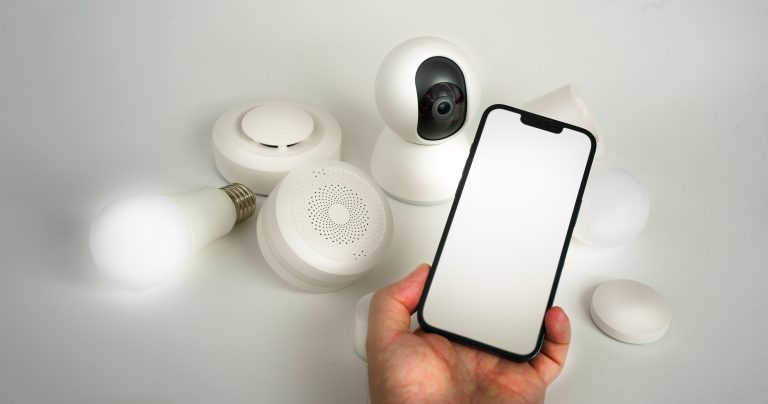
Zigbee is a low-power radio protocol that operates on the 2.4GHz band — the same frequency as WiFi, but a completely separate communication standard. Zigbee devices don’t connect to your router. They connect to a Zigbee coordinator (usually called a hub or bridge), which then connects to your home network.
The key thing that makes Zigbee different is its mesh network. Every mains-powered Zigbee device acts as a signal relay, passing messages to and from other devices. The more devices you have, the stronger and more reliable the network becomes. A sensor at the far end of your garden can communicate with the hub by hopping through plugs and bulbs along the way.
Zigbee devices use dramatically less power than WiFi. Battery-powered Zigbee sensors typically last 2–4 years on a single set of AA or coin cell batteries. The equivalent WiFi sensor lasts 3–6 months. For motion sensors, door sensors, and temperature sensors — anywhere you want wireless and battery-powered — this difference is significant.
The tradeoff is the hub requirement. Philips Hue uses its own Zigbee hub (the Hue Bridge). IKEA uses its own hub. SmartThings and Home Assistant can coordinate Zigbee devices from multiple brands using a USB dongle. You need to think about this upfront — which hub, which brands are compatible with it, and whether you want to manage a local hub device.
Zigbee also operates locally by default. Commands go from your app to the hub on your local network, and from the hub to the device — without touching the internet. This makes Zigbee setups more reliable during outages and less dependent on manufacturers keeping their servers running. We covered this in detail in our guide to smart home without internet.
Best for: Battery-powered sensors and devices, larger setups with many devices, anyone who wants local control and reliability, households already using Philips Hue or IKEA smart home products.

Thread: The Newer Alternative Worth Knowing About
Thread is a newer low-power mesh protocol designed to fix some of Zigbee’s limitations. Like Zigbee, it’s a local radio protocol that doesn’t depend on WiFi. Unlike Zigbee, Thread devices have real IP addresses — they’re full participants on your network rather than devices that communicate through a proprietary hub.
Thread requires a Thread Border Router to connect to your home network. The good news: this hardware is already built into Apple TV 4K (3rd gen), HomePod mini, HomePod (2nd gen), and recent Amazon Echo devices. If you have any of these, you already have a Thread Border Router.
Matter — the new cross-platform smart home standard — uses Thread as its preferred protocol for battery-powered devices. A Matter device that runs on Thread can be added to Alexa, Google Home, and Apple Home simultaneously, without any hub or bridge specific to that brand.
Thread is where the industry is heading, particularly for sensors and battery-powered devices. It’s not yet as widely supported as Zigbee — the ecosystem is smaller — but it’s growing fast as Matter adoption increases.
Best for: New purchases in 2026 where you want long-term flexibility, Matter-certified devices, households with Apple TV or HomePod already in use as home hubs.
Zigbee vs WiFi: The Practical Decision
For most people buying their first smart devices, WiFi makes sense to start. It’s simpler, requires no additional hardware, and works fine for plugged-in devices like smart plugs, bulbs in fixed locations, and smart switches. Read our guide on choosing smart bulbs for how this plays out in practice.
Once you start adding battery-powered sensors — motion sensors for automations, door sensors for security, temperature sensors for room-by-room comfort — Zigbee becomes the better choice. The battery life difference alone justifies the hub investment at this point.
If you’re buying new devices in 2026 and want to future-proof, look for Matter-certified devices that support Thread. They work with all platforms, they’re locally controlled, and they have the best long-term support prospects as the industry consolidates around the Matter standard.
The one scenario to avoid: mixing protocols without a plan. A house with some Zigbee devices on a Hue bridge, some WiFi devices in their own apps, and some Z-Wave devices on a SmartThings hub ends up with four different apps and no unified control. If you want everything in one place, either commit to one protocol and hub, or use Home Assistant which can bridge all of them.

Conclusion
Zigbee vs WiFi isn’t a question with one right answer — it depends on what devices you’re buying and what problems you’re trying to solve. WiFi for plugged-in devices where simplicity matters. Zigbee for sensors and battery-powered devices where longevity and reliability matter. Thread for new purchases where future compatibility matters.
The mistake most people make is defaulting to WiFi for everything because it’s familiar, then discovering six months later that their router is overloaded, their sensor batteries are dying every few months, and half their devices go offline when the internet hiccups. Understanding the difference upfront saves that frustration.
My honest take on zigbee vs wifi: start with WiFi for the first few devices, but plan for Zigbee or Thread from the beginning if you know you want motion sensors or door sensors. The hub cost is minor compared to the battery replacement and reliability headaches it prevents.