Is a Smart Home Good for the Environment? An Honest Look
Smart home technology and sustainability have an obvious overlap — energy monitoring, smart thermostats, automated lighting — but also a less obvious tension. Every device you add to a smart home was manufactured, consumes standby power, and will eventually become electronic waste. The question of whether a smart home is good for the environment has a more complicated answer than either the marketing or the criticism suggests.
This guide on smart home environment impact works through what the evidence actually shows, where the genuine environmental benefits are, and where the industry’s environmental claims don’t hold up to scrutiny.
Where Smart Home Environment Benefits Are Real
Heating and cooling efficiency
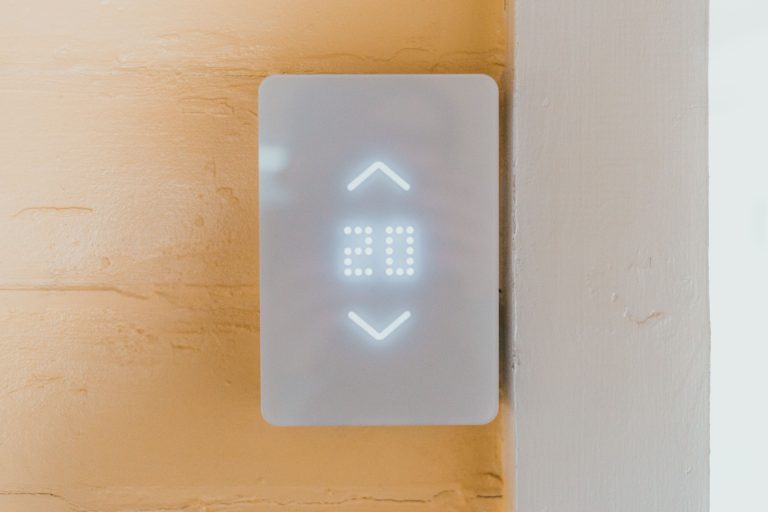
HVAC accounts for 40–60% of residential energy use in most climates. A smart thermostat with geofencing reduces heating and cooling of unoccupied spaces — the single largest source of residential energy waste. Real-world studies consistently show 10–15% reductions in HVAC energy use when geofencing is used consistently.
At scale this is meaningful. If 40% of US households adopted smart thermostats with geofencing, the reduction in residential energy use would be measurable at the grid level. This is the environmental benefit that’s most clearly supported by data.
Demand shifting
Smart home devices that shift high-consumption tasks (EV charging, washing machines, dishwashers) to off-peak hours do something important beyond saving the household money — they smooth out electricity demand curves. Grid operators struggle with demand spikes, particularly in the evening when renewables often produce less and demand is high. Shifting these loads to overnight or midday (when solar generation peaks) reduces the need for peaker plants, which are typically gas-fired and expensive to run.
This benefit scales with adoption. One household’s shifted EV charger is invisible to the grid. Millions of them, responding to time-of-use pricing signals, meaningfully reduce peak demand.
Standby load elimination
The “phantom load” — electricity consumed by devices in standby — accounts for roughly 5–10% of residential electricity use in the average US home. Smart plugs that cut power to entertainment stacks and home office equipment overnight are removing genuine energy waste, not just shifting it.
Where the Environmental Case Is Weaker
Device manufacturing footprint
Every smart home device requires raw materials, manufacturing energy, and transportation. A smart bulb that costs $20 and lasts five years has a manufacturing carbon footprint that takes roughly 6–18 months of operation to offset through energy savings, depending on your grid’s carbon intensity and how much you were previously wasting.
If you’re replacing a functioning standard LED bulb with a smart bulb for environmental reasons, the calculation often doesn’t work in your favour. Smart bulbs make environmental sense when replacing incandescent or halogen bulbs, or when the added control meaningfully reduces waste. Replacing a five-year-old LED to “go smarter” is rarely justified on environmental grounds.
E-waste and planned obsolescence
Cloud-dependent smart devices have a service lifetime tied to the manufacturer’s server infrastructure, not the device’s physical durability. When Insteon shut down in 2022, thousands of functional devices became inoperable. The physical hardware wasn’t worn out — the software infrastructure that made them useful was gone.
This is a genuine environmental problem. A device that lasts three to five years before the manufacturer discontinues support has a very different environmental footprint than one that lasts fifteen years. Local-control devices — particularly those that can be flashed with open-source firmware — have longer useful lifespans and are better for the environment by this measure. We covered this in our smart home without internet guide.
Smart lighting energy savings are modest
LED bulbs use 8–12 watts. The difference between a smart LED and a standard LED is minimal — the smart radio adds perhaps 0.5 watts of standby draw. The environmental benefit of smart lighting compared to standard LED comes almost entirely from automation that reduces “lights left on” waste, not from the technology itself.
If you’re already conscientious about turning lights off, smart bulbs offer minimal environmental benefit over standard LEDs and cost more to manufacture.
The Carbon Math on Key Devices
Using US average grid carbon intensity (0.39 kg CO2 per kWh in 2025) and typical household usage:
Smart thermostat: 10–15% reduction on HVAC → roughly 300–500 kg CO2 saved per year for a home with central air and heating. Manufacturing footprint offset within the first year of use. Clear environmental win.
Smart plug on entertainment stack: 40 watts standby eliminated → roughly 140 kWh per year → 55 kg CO2 saved. Manufacturing footprint (small device) offset in 2–3 months. Good environmental win.
Smart bulb replacing incandescent: 60W → 9W reduction → substantial CO2 savings per year. Environmental win.
Smart bulb replacing standard LED: 9W → 9W (plus 0.5W standby). Minimal energy savings. Manufacturing footprint takes years to offset. Questionable environmental case.
Making Your Smart Home More Sustainable
Choose devices with local control or open firmware support — they last longer and don’t become e-waste when a manufacturer exits the market. Home Assistant-compatible devices and Matter-certified devices are better choices from a longevity perspective.
Prioritise devices that address actual energy waste: thermostat, standby loads, demand shifting. These have the clearest environmental ROI.
Don’t replace working devices to get smarter ones. The environmental cost of manufacturing a new device almost always exceeds the energy savings from marginal efficiency improvements.
Understand your grid’s carbon intensity. In regions with high renewable penetration, the carbon savings from energy efficiency are smaller (because the grid is already cleaner). In coal-heavy grids, every kWh saved has a higher carbon impact. The US EPA’s Power Profiler tool lets you check your region’s grid mix.

Smart Home Environment Impact: The Bottom Line
Smart homes can genuinely reduce environmental impact through HVAC efficiency, demand shifting, and standby load elimination. These are real effects backed by real data. The environmental case for smart thermostats and smart plugs is solid.
The environmental case for smart bulbs replacing existing LEDs, for devices with short service lifespans due to cloud dependency, and for adding complexity that doesn’t directly reduce energy use is much weaker. The industry’s environmental marketing often conflates “could be more efficient” with “is more efficient in practice.”
A smart home environment setup that’s genuinely better for the planet is one that reduces actual energy waste, uses devices built to last, and avoids the manufacturing footprint of devices that don’t serve a genuine energy-reduction function. That’s a smaller, more targeted smart home than most product catalogues suggest.